Settlement vs. Hearing in Colorado Family Law Cases: Costs, Timing, and Control
When proceeding with a divorce, legal separation, or allocation of parental responsibilities case, every couple will face a major question at some point in the process: Should we settle or go to a hearing to let the judge decision? Either option could be the right one.

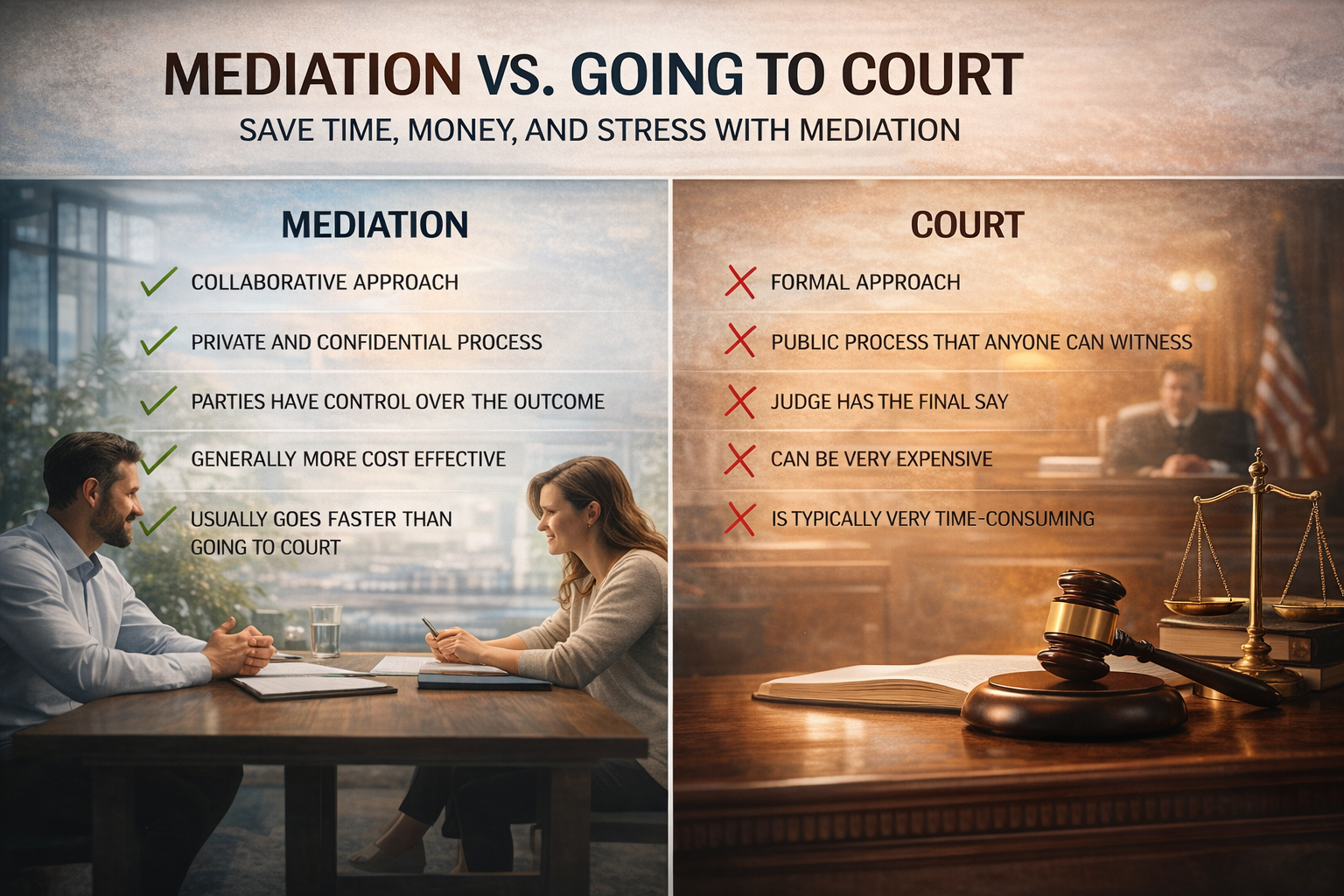
At Gant Law, we believe that reaching a compromise is holistically almost always better than letting a court choose your compromise instead. These cases involve splitting up assets and debts, determining who will be responsible for various expenses, setting a parenting time schedule and decision-making authority for any minor children, establishing child and spousal support obligations, and the like—these are very personal subjects, and every couple knows their own lives better than a court ever can. You may have heard legal professionals say that just about no one is ever 100% satisfied with the resolution of every issue in family cases, and this is true due to the nature of the issues and overall presumptive legal goal of fairness to both parties. However, it’s nearly always better, overall, to reach agreements where each party has a say in which gains and losses they walk away with, personalized to them, rather than leaving the result in the court’s hands. Below are a few major benefits that come with reaching settlement agreements.
Timing: Parties to a case can often move far more quickly than a court can. Depending on the county, the docket, and the parties’ personal schedules, a full day hearing in court often gets set out three to six months—this time is extended even more if additional time in court is needed. So long as the parties and their legal representatives (if they have hired counsel) openly and regularly communicate throughout the process, swap financial information in a timely manner, propose ideas for agreements, and attend mediation as soon as it makes sense, then cases can move more swiftly. There is a 91-day period between the time a divorce petition is filed and when the court is legally able to enter a divorce decree. Besides that, the timing of attempting to settle is in the hands of the parties.
Costs: Reaching a settlement agreement is nearly always less expensive than attending a hearing, the legal fees for which can easily exceed ten to thirty thousand dollars. Two parties reaching a complete agreement as to every single issue in the case is the cheapest possible outcome. Of course, it’s also never a bad idea to seek legal counsel to some extent, whether to simply get an expert opinion on a proposed agreement or for full representation in a more contentious case. In many instances, parties may be able to agree about a few things initially but not about every single issue right away. Absent specific circumstances, the court will always require that the parties mediate before setting a hearing anyway. If mediation goes well but the parties run out of time to finalize everything, they always have an opportunity to mediate again and again until all possible agreements have been reached. Any issues that remain in dispute must be determined by the court in a hearing. When represented by counsel, the costs of going through a hearing are usually very high, which is an important consideration before a hearing. For example, say a divorcing couple is disputing who should keep a marital asset valued at $2,000. If the agreement hinges on this, and the alternative is the parties have to attend a full-day hearing on the division of marital property, it could be a sensible compromise to agree to let the other party keep the asset and seek a different compromise rather than spending tens of thousands of dollars in legal fees for court.
Control: Again, almost no party to a family law case ever finds themselves 100% satisfied with the outcome. This is, in large part, because these cases simply require a lot of change, and the changes can feel painful at first, both personally and financially. Parties may have to move to a new home, start splitting time and holidays with their children, divide their hard-earned assets, and take on previously split expenses on their own. Settlement provides the opportunity for parties to negotiate small wins and losses and be a bit better off than what they otherwise risk by allowing a court with limited time and context to decide for them. Judges themselves even strongly encourage parties to attempt to reach agreements. There is not enough time in a typical hearing to present every single relevant detail to a judge, so they have to do their best with what they’re presented. This can make both parties feel unheard and unhappy to an uncertain extent. In contrast, settlement allows the parties to voice their opinions, maintain a bit more control, think more creatively, and agree to customized plans that likely meet somewhere in the middle of both sides’ preferences.
Co-Parenting: For family cases involving minor children where both parties are fit parents (and there are no exigent/emergency circumstances involved), how a couple approaches a case can also set the tone for their child(ren)’s experience with the process and for future co-parenting. Children tend to be naturally impacted by their parents parting ways—they are also often observant and intuitive, making them privier to the emotions and actions of the adults around them than they’re given credit for. While it can certainly be easier said than done, when parties try to approach their case collaboratively, this can aid in decreasing the tension and fear experienced by their children. Regardless of what led to the end of the relationship, couples who are able to place their children’s best interests at the forefront and remain civil, reasonable, and collaborative can protect their children while also making the process easier and perhaps even friendlier for themselves, which is the hope for co-parenting after the case has ended.
While we strongly believe in avoiding needless litigation whenever possible, we also understand that going to court can be appropriate—and even necessary—in certain cases, and we take our role of advocating for clients in court very seriously. When one party unreasonably refuses to budge on a vital issue, even after settlement attempts, it may be best to bring that issue in court. For example, if one party will only agree to having 100% of the parenting time with their children and the other party is a loving, responsible parent, then that party should indeed present their case to a judge. This is when it’s important to have experienced, mindful counsel who will make every effort to ensure their client has realistic expectations and will encourage compromise, rather than going through a long, expensive hearing only to achieve the anticipated result anyway.
Regardless of your situation, our experienced and compassionate family law attorneys can help you navigate the options, benefits, and risks involved with settling or going to court.